

Ask any founder which stage of company building was the hardest and most will point to the same stretch: getting from zero to your first 100 customers. There is no brand to lean on, no case studies, and no word of mouth. It is just you, a product, and a market that has never heard of you. For AI-native SaaS companies in 2026, the playbook looks different from what growth blogs taught five years ago. Paid ads are expensive, Google sends less traffic than ever, and buyers increasingly ask ChatGPT or Perplexity which tool to use before they ever see your landing page.
The good news is that the fundamentals still work, and a few newer channels now work better than ever for small teams. This playbook walks through how AI-native SaaS companies actually acquire their first users, with tactics you can start this week.
 Photo by
 Why Your First 100 Customers Matter More Than Your First 10,000
Your first 100 customers are not just revenue. They are your research lab. Each early customer teaches you who the product is really for, which message convinced them to sign up, and what almost made them leave. Companies that rush past this stage with paid acquisition often scale a leaky funnel, and they spend years paying for that shortcut.
Early customers do three jobs for you. First, they validate that the problem is painful enough that someone will pay to solve it. A waitlist proves curiosity. A credit card proves pain. Second, they hand you your positioning. The words early customers use to describe your product are almost always better than the words you wrote on your homepage. Steal them. Third, they seed word of mouth. In tight niches, ten happy customers who talk to each other are worth more than a thousand anonymous signups.
Treat these people as design partners, not transactions. Get on calls. Watch them use the product. Ask what they tried before you. The speed at which you learn from your first 100 customers matters far more than the speed at which you acquire them.
Start With Manual Outreach, Not Ads
The most reliable path to your first customers is also the least glamorous: founder-led outreach, one message at a time. It feels slow. It does not scale. That is exactly why it works, because almost no funded competitor is willing to do it.
Here is the basic motion. Build a list of 200 people who match your ideal customer profile. Find them on LinkedIn, in niche Slack and Discord communities, in subreddits where your problem gets discussed, and in public complaints about your competitors. Then send 10 personal messages a day. Not sequences. Not templates with a first name token. Real messages that reference something specific the person said or built.
Follow up matters as much as the first message. Most replies come on the second or third touch, so keep a simple log of who you contacted and when, and circle back after five to seven days with something new and useful, like a relevant resource or a short product update. Persistence reads as conviction when each message adds value.
Founder outreach converts at rates that would make any marketer jealous, because people respond to builders. Offer something concrete: a free concierge onboarding, a founding customer price locked for life, or a personal walkthrough. Your goal from this channel alone should be your first 10 to 20 customers. If you cannot get 10 customers manually, ads will not save you. They will only help you fail faster.
We covered the broader solo and small team approach in our guide to the distribution-first founder, which pairs well with this stage.
 Photo by Negative Space on Pexels
Turn AI Search Into Your Discovery Engine
Your buyers have changed how they research. Before they visit your website, many of them ask an AI assistant a question like "what is the best tool for X" and act on the answer. For an AI-native SaaS company, showing up in those answers is not a nice extra. It is a primary acquisition channel that compounds while you sleep.
Getting cited by ChatGPT, Perplexity, and Gemini rewards a specific kind of content. Write pages that answer one concrete question completely. Publish honest comparison pages, including comparisons where you are not the best fit for every reader. Keep your pricing public and easy to parse. Structure your docs so an AI crawler can quote them cleanly. The brands winning AI citations are the ones that publish the most quotable, specific, and trustworthy answers in their niche.
The same logic applies to communities. Reddit threads, niche forums, and Discord servers are where AI models and real buyers both go to learn what people actually recommend. Participate before you promote. Answer questions for weeks before you ever mention your product, and when you do mention it, disclose that you built it. One helpful, transparent comment in the right thread can outperform a month of cold ads.
For a deeper dive into this channel, see our founder's playbook on AI search as your number one acquisition channel.
Five Acquisition Plays That Get You to Your First 100 Customers
Not every play fits every product. Here is how the five highest-leverage options compare for an early stage SaaS team.
| Play | Cost | Time to Results | Best For |
|---|---|---|---|
| Founder-led outbound | Free | 1 to 2 weeks | B2B tools with a clear ICP |
| Community participation | Free | 2 to 6 weeks | Developer and niche products |
| Build in public | Free | 4 to 8 weeks | Products with founder-friendly audiences |
| Micro influencer partnerships | Low | 2 to 4 weeks | Visual and demo-friendly products |
| AI search content | Low | 6 to 12 weeks | Products people research before buying |
Run one play at a time and give it an honest two week test before judging it. Founders who try all five at once usually execute each one poorly and conclude that nothing works. Sequencing beats spreading thin.
A few notes on the plays we have not covered yet.
Build in public means sharing your metrics, lessons, and product decisions openly on X, LinkedIn, or TikTok. It turns your company building journey into a content engine and attracts customers who want to support founders they trust. It takes consistency, but the audience it builds is unusually loyal.
Micro influencer partnerships are underrated for SaaS. Creators with 10,000 to 100,000 followers in your niche will often produce an honest demo video for a modest fee or an affiliate deal. Their audiences trust them, their rates are reasonable, and a single well-matched video can drive dozens of trial signups. The key is matching on audience relevance, not follower count.
If budget is your main constraint, our bootstrapped marketing playbook breaks down how to run several of these plays on close to zero spend.
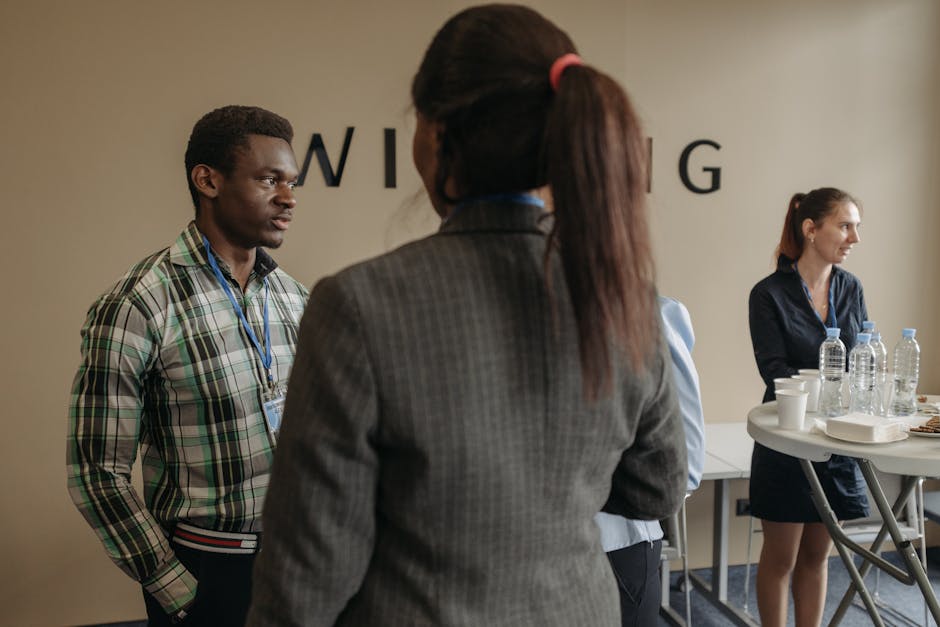 Photo by Pavel Danilyuk on Pexels
Measure What Matters Before You Scale
The point of your first 100 customers is to earn the right to scale. That means tracking a handful of signals from day one, and a spreadsheet is enough. You do not need an analytics stack yet.
Track four things for every customer. Where they came from, so you learn which channel actually produces buyers rather than visitors. Whether they activated, meaning they reached the moment where your product delivered real value. Whether they are still active 30 days later. And why they bought, in their own words, captured from a call or a one question survey.
The pattern you are looking for is simple. One channel that repeatably produces customers, an activation rate above roughly 40 percent, and 30 day retention that holds steady. When you see all three, you have something worth scaling, and every dollar you spend on growth will work harder. If you scale before retention holds, you are renting growth, not building it.
One more habit worth keeping: write down what you learned from each of your first 100 customers. The founders who do this end up with sharper positioning, better onboarding, and a roadmap shaped by real demand instead of guesses.
Your First 100 Customers Are a Process, Not a Miracle
Getting your first 100 customers is not about finding one magic channel. It is about running small, honest experiments across founder outreach, communities, AI search, and creator partnerships, then doubling down on the one that produces real retained users. AI-native SaaS companies have an edge here, because the same curiosity that built the product can be pointed at distribution.
Start with 10 manual conversations this week. Publish one genuinely useful answer in your niche. Ship one creator partnership. Momentum compounds faster than you expect.
When you are ready to add creators to your acquisition mix, Bizkol helps you find, vet, and manage the right KOLs with AI doing the heavy lifting.
Start your free trial at Bizkol
Photos provided by Pexels