

Most founders still budget their first marketing dollars for Google Ads and SEO. That logic worked five years ago. Today, the smarter bet is ai search acquisition, the practice of optimizing your brand for citations inside ChatGPT, Perplexity, Claude, and Google AI Overviews. These tools are where buyers ask their real questions, and the answers they receive often skip your traditional landing pages entirely.
 Photo by Monstera Production on Pexels
If you ship in 2026, AI search is not a side channel. It is becoming the discovery layer that decides whether prospects ever reach your site. This guide breaks down a practical playbook for founders and small teams who want to turn ai search acquisition into their primary growth lever.
Why AI Search Beats Google for Founders
Google still drives volume, but the quality has shifted. Click through rates on classic blue links have dropped sharply since AI Overviews became default for most informational queries. Buyers now phrase questions in full sentences, expect a synthesized answer, and only click through when something in that answer catches them.
For a founder with a tiny team, this is good news. You no longer need 200 ranked pages to compete. You need 10 to 20 pages that are explicit, well structured, and trusted enough to be cited inside the AI answer. Citation slots are limited, usually three to seven sources per response, so a strong page can punch far above its domain authority weight.
There is also a frequency effect worth understanding. The same prospect may ask three or four follow up questions across a single ChatGPT or Perplexity conversation. If your brand appears in the answer twice, it lodges in memory in ways a paid ad never could. That is brand and demand generation rolled into one channel, with no ad auction in the middle taking a cut.
The other shift is buyer intent. Someone who types a comparison query into ChatGPT is closer to a purchase decision than someone clicking a top funnel ad. AI search filters out browsing intent and concentrates buying intent into a smaller set of conversations.
The AI Search Acquisition Stack: 5 Layers That Compound
A working ai search acquisition program has five layers. Founders who skip a layer tend to plateau quickly. Founders who run all five tend to see compounding gains within 90 days.
- Audit how AI sees you today. Run your brand name and your top three buyer questions through ChatGPT, Perplexity, Claude, and Google AI Mode. Record what gets cited, what gets paraphrased, and where competitors win.
- Pick five buyer questions to own. These are the prompts your ICP types into an AI tool right before they would consider buying. Avoid pure top of funnel keywords. Pick questions that lead to a purchase decision.
- Publish definitive answer pages. One question, one page, structured for extraction. Lead with the answer in the first 100 words. Use clear H2s. Add a comparison table when relevant. Include numbered steps.
- Earn citations off site. AI tools weigh third party mentions heavily. Get listed on roundups, alternatives pages, Reddit threads, podcasts, and industry directories. Each mention raises the chance your brand gets surfaced.
- Measure and iterate weekly. Track which prompts cite you, which competitors block you, and how often the citation includes a click through. Adjust pages and outreach based on what is moving.
This five layer loop is what we cover in our founder distribution playbooks, and it pairs well with the broader shift toward a zero click search strategy. Most founders treat these as separate workstreams. They should not. They share the same content backbone.
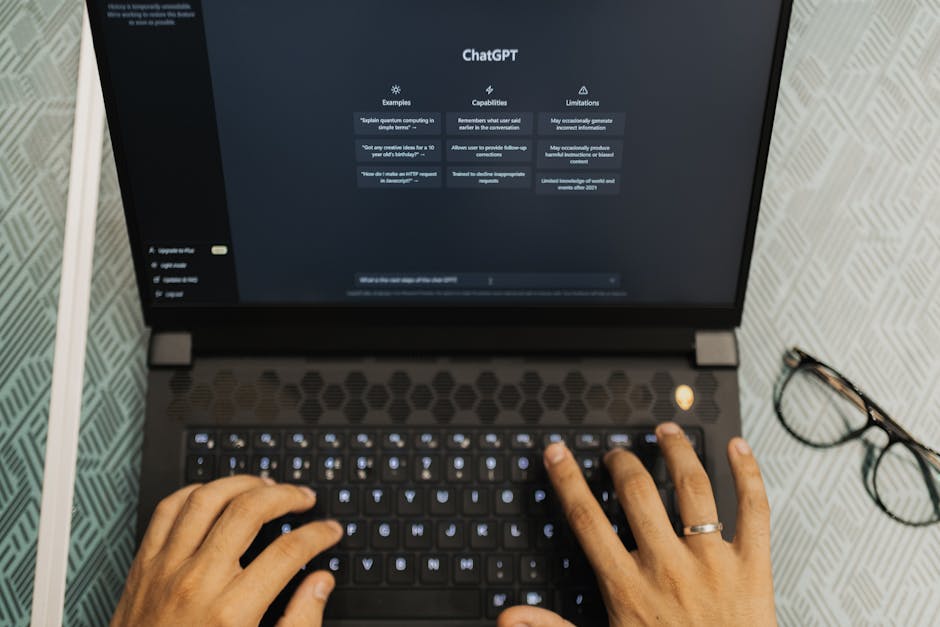 Photo by Matheus Bertelli on Pexels
What to Publish (And What ChatGPT Actually Cites)
There is a pattern to the content that earns AI citations. We studied dozens of ChatGPT and Perplexity answers across SaaS, ecommerce, and creator economy queries. Three formats win the most slots.
The first is the explicit comparison post. Side by side tables, clear winners by use case, and honest weaknesses. AI tools love this format because they can lift rows verbatim and present a balanced answer.
The second is the data backed list. Posts with original statistics, surveys, or benchmark numbers get cited because AI tools need a source to attribute a fact. If you run the survey yourself, you become the original source. Independent research is one of the few moats a small team can build inside ai search acquisition.
The third is the step by step guide with numbered actions. Specificity matters. "Set your bid to 1.2x the category average" gets cited. "Optimize your bid" does not.
Avoid thin opinion posts, listicles padded with affiliate links, and anything that reads like AI generated filler. The crawlers can spot that pattern now, and human editors at Perplexity and ChatGPT have been visibly pruning low quality sources from their citation pool. For a deeper look at the citation mechanics, our piece on how ChatGPT picks which page to cite walks through the query fan out process.
| Content type | Citation likelihood | Founder difficulty | Best for |
|---|---|---|---|
| Comparison post | High | Medium | Bottom of funnel buyers |
| Original stat report | Very high | High | Authority building |
| Step by step guide | High | Low | Solution awareness |
| Brand opinion essay | Low | Low | Founder voice |
| Pure listicle | Very low | Low | Traffic, not citations |
Read the table as a prioritization map. If you have time for one post this month, write a comparison piece. If you have a research partner, run a survey. Skip the opinion essays until your brand has earned the room to be heard.
How to Measure AI Search Acquisition When Analytics Goes Dark
The hardest part of ai search acquisition is attribution. Most AI tools strip referrers, so a visit from ChatGPT often shows up as direct traffic in GA4. That sends founders chasing the wrong channels and underspending on the one that is actually working.
Three measurement approaches work today.
Start with prompt monitoring. Tools like Profound and Athena HQ, along with manual prompt tracking spreadsheets, let you log which buyer prompts cite your brand and how often. This becomes your share of voice inside AI search. Run the same prompt set every Monday morning and chart the trend.
Next, watch direct traffic and branded search trends. A rising direct traffic baseline with no corresponding paid spend usually signals AI citations are driving discovery. Branded search volume in Google Search Console is the cleanest leading indicator we have found. When ChatGPT mentions your brand, the next step many users take is searching the name on Google.
Finally, add a single optional question to your onboarding flow. Ask "How did you first hear about us?" with ChatGPT, Perplexity, Claude, and Google AI as listed choices. Self reported attribution is imperfect, but it triangulates well with the other two methods and often surfaces channels that analytics cannot see.
 Photo by Lukas Blazek on Pexels
Common Mistakes That Tank Your AI Visibility
Founders trip on the same five mistakes. Avoid them and you will outrank teams ten times your size.
The first mistake is hiding the best content behind login walls. Crawlers can see public pages only. If your sharpest playbooks sit behind email gates, AI tools cannot cite them. Move the top of the page to public access and gate the deeper assets.
The second is blocking AI crawlers without realizing it. Many founders enable Cloudflare bot fight mode, which blocks GPTBot, ClaudeBot, and PerplexityBot by default. Check your robots.txt and your Cloudflare WAF rules before you start publishing.
The third is over optimization. Stuffed keywords, robotic structure, and recycled GPT drafts all reduce citation rates. AI tools prefer pages that read like a human expert wrote them for another human reader.
The fourth is ignoring third party signals. If your brand never appears on Reddit, in YouTube reviews, or in industry roundups, AI tools have no corroboration. They tend to cite brands that show up in more places, not necessarily the one with the best site. A weekly outreach loop matters as much as the page itself.
The fifth is publishing once and walking away. AI citation patterns shift weekly. The post that owned a prompt in March can lose its slot in May. Revisit your top ten pages every 30 days and refresh them with new data, fresh examples, and updated comparisons.
Founders who treat ai search acquisition as a project will get a small bump. Founders who treat it as a compounding channel will build a moat. Every cited page earns trust signals that improve future citations. Every off site mention raises the floor. Every prompt you own removes a question your sales team would otherwise need to answer. The cost is far lower than paid search, the curve is steeper than classical SEO, and the channel is still uncrowded enough that a small team can dominate a niche in 90 days.
Start your free trial at Bizkol
Photos provided by Pexels